

Elect Deb Haaland, get socialized health care
The old Margaret Thatcher line is: “The Problem With Socialism is that you eventually run out of other people’s money.” That may sound like a truism in a world of limited resources financial and otherwise, but it is increasingly clear that New Mexico’s Democrat politicians are looking to test the limits of just how much socialism they can pay for with resources generated by New Mexico’s oil and gas industry.

Under Lujan Grisham we’ve seen “free” childcare, pre-K, and college, and massive growth of K-12 spending even while outcomes worsened and the number of students declined.
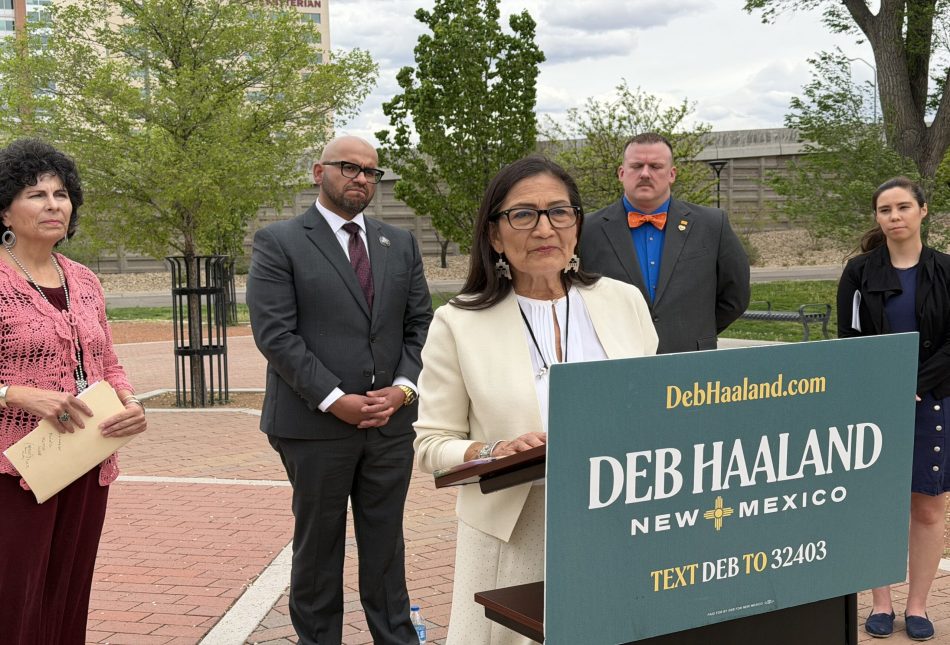
Now, gubernatorial candidate Deb Haaland and speaker Javier Martinez are touting “single payer” health care to further advance the socialist agenda. A few weeks ago we discussed Martinez’s comments to this effect and pointed out that among the handful of states that had adopted “single payer” health care they had ALL abandoned it due to the high cost.
But, as reported in the Santa Fe New Mexican, “Speaker Javier Martínez said the state could use its permanent funds — investment funds largely derived from oil and gas royalties and other state land payments — to pay for a health care expansion, similar to how the state has funded universal child care and tuition-free college.” It’s true, $70+ billion COULD buy a lot of health care no matter how wasteful or problematic they system might be.
At their joint press conference, Martínez repeated his line (used during the session to justify the Cuban health care model) that the “original sin” of the American health care model was “adopting a for-profit system.” Conveniently Martinez “forgets” that nearly half of US health care and likely a far higher percentage of New Mexico’s health care is paid for by government and that doesn’t include the piles of regulations and tax policies that put government and insurance companies in the drivers’ seat.
Haaland, again taking a socialistic stance claimed “Health care is not a luxury; it is a right,” a position that implies a right to the labor of doctors, nurses, and pharmacists (to name a few). Ignores the fact that health care is a finite economic good. Because resources are limited, it cannot be a universal right in the same manner as “negative rights” (rights that prohibit interference). Finally, it is unclear if it covers all possible treatments or merely basic care. Do you REALLY have a “right” to breast implants, cosmetic surgery, and unproven treatments?